Guides
Window Cleaning Business Operations: Provincial Board Rules
Window cleaning business operations in Ontario, British Columbia and Quebec: how WSIB, WorkSafeBC and CNESST handle coverage, reporting and inspections.
What to take away
- Ontario, British Columbia and Quebec each run their own workers' compensation board, and none accepts another province's registration as a substitute.
- WSIB and WorkSafeBC require registration once you have workers on payroll; CNESST covers employees and also lets self-employed cleaners register for coverage.
- Premiums follow a rate group or classification unit, then experience rating, so two window cleaning firms in one province can pay different rates.
- A clearance certificate protects the hiring firm from a subcontractor's unpaid premiums.
- Ontario splits compensation from enforcement, while WorkSafeBC and CNESST handle both, which changes who inspects your site after a fall.
How the three boards split compensation and enforcement
For window cleaning business operations, the three boards share one purpose: collective liability for workplace injury. They differ in who must register, how rates are set, and whether the same body also inspects your sites.
Who Does What by Province
WSIB Ontario
- Compensation
- Yes
- OHS enforcement
- Separate ministry
- Site inspections
- MLITSD
- Return-to-work duties
- Board rules
- Accounts needed
- One
WorkSafeBC
- Compensation
- Yes
- OHS enforcement
- Same agency
- Site inspections
- Prevention officers
- Return-to-work duties
- Board rules
- Accounts needed
- One
CNESST Quebec
- Compensation
- Yes
- OHS enforcement
- Same agency
- Site inspections
- CNESST
- Return-to-work duties
- Employer duties
- Accounts needed
- One
The WSIB administers the Workplace Safety and Insurance Act in Ontario. It registers employers, collects premiums and pays benefits. Enforcement of the Occupational Health and Safety Act sits with a separate ministry.
WorkSafeBC handles both sides in British Columbia. Prevention officers can inspect a suspended platform and order compliance, and the same agency adjudicates the claim that follows.
CNESST does the same in Quebec, administering compensation and prevention together. It also carries return-to-work duties that employers must answer.
British Columbia registration sits alongside general small business requirements, which the province's small business resources set out. Quebec employers can review registration and declaration duties through the Quebec government's hiring and managing staff guidance.
For a contractor working in all three, the result is three accounts, three payroll declarations and three reporting channels. Nobody consolidates them for you.
Who counts as a covered worker on a window cleaning crew
Coverage follows the employment relationship, not the height of the building. A cleaner on a swing stage is covered in every province if the firm registered and reported the payroll.
Who Is Covered on a Crew
WSIB Ontario
- Employees
- Covered
- Independent operators
- Optional insurance
- Solo self-employed
- No automatic cover
- Unregistered helper
- Uninsured exposure
WorkSafeBC
- Employees
- Covered
- Independent operators
- May opt out
- Solo self-employed
- Optional protection
- Unregistered helper
- Uninsured exposure
CNESST Quebec
- Employees
- Covered
- Independent operators
- Can register
- Solo self-employed
- Coverage available
- Unregistered helper
- Uninsured exposure
In Ontario, the WSIB covers employees of registered firms. Independent operators can apply for optional insurance, but nothing covers them automatically. A crew lead paid hourly is an employee.
WorkSafeBC covers workers of registered employers. Directors and some owner-operators may be able to opt out or apply for personal optional protection, depending on their role and the firm's structure.
In Quebec, CNESST covers employees of registered employers, and self-employed workers can register for coverage. That suits a solo cleaner who wants protection without hiring anyone.
The gap that hurts is a single unregistered helper on a rope. That one person creates an uninsured exposure for the whole firm, and the fix is checking who is on the rope, not who is on the payroll.
Reporting a fall: deadlines and the second phone call
A fall from height triggers two duties at once. You report to the compensation board, and in two of the three provinces you report to a separate safety regulator as well.
In Ontario, an employer must report a work-related injury that needs treatment from a health professional to the WSIB within three business days of learning about it, on the Employer's report of injury/disease (Form 7), which is now filed through the WSIB's online services. A critical injury goes to the Ministry of Labour, Immigration, Training and Skills Development immediately by phone, with a written report to follow within 48 hours under section 51 of the Occupational Health and Safety Act. Those are two different reports to two different bodies.
WorkSafeBC requires immediate reporting of serious injuries, deaths and certain incidents, plus an investigation. A fall from a suspended platform draws both a report and a prevention review. The written incident investigation report follows within 30 days.
In Quebec, CNESST receives the injury report and acts as the prevention regulator. Employers must declare the injury within 2 days of learning of it and cooperate with any investigation.
The sequence is broadly the same everywhere:
Reporting a Fall From Height
- Get medical care, make scene safe
- Notify compensation board employer channel
- Notify OHS regulator if serious
- Preserve equipment, anchors and rope
- Record incident, witnesses, corrective actions
- Follow up return-to-work and correspondence
Reporting a fall
- Make the scene safe and get the injured worker medical care.
- Call emergency services for a fall from height or any serious injury.
- Tell the compensation board inside its deadline.
- Tell the safety regulator where that is a separate body.
- Leave the platform, ropes and anchor points untouched until the investigation is done.
- File the written report and attach training and equipment records.
Late reporting is the most common administrative failure. Boards can penalize it, and a delayed report stalls the worker's benefits, which starts a dispute you did not need.
How the boards classify employers and set premiums
Rates are assigned by rate group or classification unit, never by job title. Claims history then adjusts what you actually pay.
Rates, Registration and Clearance
WSIB Ontario
- Registration trigger
- Workers on payroll
- Rate basis
- Rate group
- Experience rating
- Yes
- Self-employed coverage
- Optional
- Clearance document
- Clearance certificate
- OHS regulator
- MLITSD
WorkSafeBC
- Registration trigger
- Workers on payroll
- Rate basis
- Classification unit
- Experience rating
- Yes
- Self-employed coverage
- Optional protection
- Clearance document
- Clearance letter
- OHS regulator
- WorkSafeBC
CNESST Quebec
- Registration trigger
- Workers on payroll
- Rate basis
- Unit
- Experience rating
- Yes
- Self-employed coverage
- On registration
- Clearance document
- Good standing
- OHS regulator
- CNESST
The WSIB places Ontario employers in rate groups by the nature of the business. Window cleaning lands in a building services classification rather than construction, which keeps the base rate below high-rise construction trades while still reflecting fall risk. The WSIB's construction rate framework changes show the move: as of January 1, 2018, certain business activities left Class G, Construction, and window cleaning went to Rate Group 923, CU Code 9952-002, "Window Cleaning — ground level and above (Class I)", the same rate group as janitorial operations. The WSIB's 2026 premium rate statement now names your North American Industry Classification System (NAICS) classification, new businesses are assigned the class rate of the class or subclass they are placed in, and the rate then moves with your own claims experience.
WorkSafeBC uses industry classifications with a base rate per classification unit, then applies experience rating. A clean claims record lowers the effective rate over time, and a serious fall claim raises it.
CNESST sets rates by unit and also applies experience rating, spreading the cost of a serious injury across the employer's assessment.
The WSIB publishes a rate for each numbered rate group as dollars per $100 of payroll in its annual Schedule of Rates. WorkSafeBC publishes a base rate per classification unit, and its units carry six-digit numbers.
CNESST publishes a rate per unit in its own annual table. A group number from one board means nothing at another. Each table carries the year in its title, so quote the year alongside the figure.
Premium rates and rate groups
WSIB (Ontario)
- Registration trigger
- Workers on payroll
- Rate basis
- Rate group plus experience rating
- Self-employed coverage
- Optional
- Clearance document
- Clearance certificate
- OHS regulator
- MLITSD
WorkSafeBC (BC)
- Registration trigger
- Workers on payroll
- Rate basis
- Classification unit plus experience rating
- Self-employed coverage
- Personal optional protection in some cases
- Clearance document
- Clearance letter
- OHS regulator
- WorkSafeBC
CNESST (Quebec)
- Registration trigger
- Workers on payroll
- Rate basis
- Unit plus experience rating
- Self-employed coverage
- Available on registration
- Clearance document
- Certificate of good standing
- OHS regulator
- CNESST
Rate figures change every year and each board publishes the current ones. Do not budget from a remembered number. Pull the rate for your classification, multiply by your experience rating factor, and treat the result as a percentage of payroll sitting alongside window cleaning wages in your job costing.
Clearance certificates and independent operators
Subcontracting is routine in window cleaning, and it is where clearance documents earn their keep. A clearance certificate confirms a firm's premiums are paid up to a stated date.
Clearance Certificates Expire
- SpringCertificate issued
- Before each paymentRequest fresh clearance
- Each quarterMinimum refresh cycle
- AutumnSpring certificate worthless
In Ontario, a hiring firm requests a clearance certificate from the WSIB for a subcontractor. Keep a valid one on file and you are generally protected from being assessed for that subcontractor's unpaid premiums.
WorkSafeBC issues clearance letters on request, and hiring firms commonly collect one before releasing payment. CNESST provides a similar attestation of account standing in Quebec.
Clearances expire. A certificate issued in spring can be worthless by autumn, so request a fresh one before each payment cycle or at least each quarter.
Independent operators also have to decide whether to carry their own coverage. A solo cleaner in Ontario without optional coverage has no automatic WSIB protection, and a fall becomes a personal financial event. That exposure belongs in your window cleaning business insurance review, not in a drawer.
What an inspector asks to see
Ontario splits the functions. The WSIB pays benefits, while the Ministry of Labour, Immigration, Training and Skills Development enforces the Occupational Health and Safety Act, inspects workplaces and lays charges.
Quebec combines them. CNESST compensates injured workers and enforces prevention duties, so an inspection and a claim can arrive from the same body.
British Columbia sits closer to the Quebec model. WorkSafeBC prevention officers can inspect and order compliance, and the same agency holds the account.
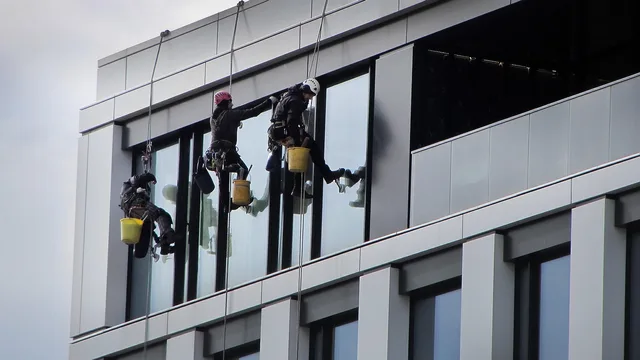
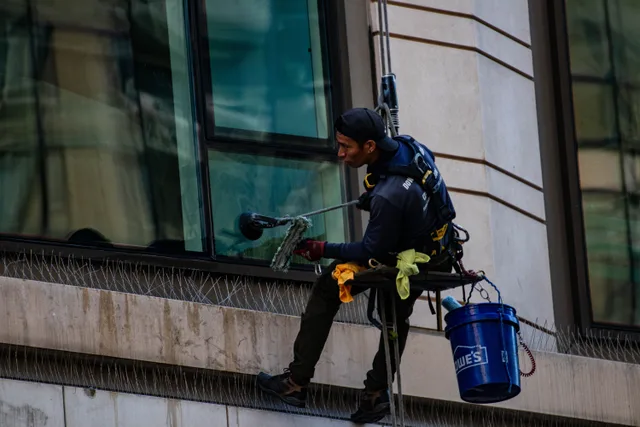
For window cleaning, the overlap shows up in fall protection, anchor points and suspended access equipment. Applicable rules include Ontario's Regulation 859 (Window Cleaning) under the Occupational Health and Safety Act, British Columbia's Occupational Health and Safety Regulation, Part 11 (Fall Protection), and Quebec's Regulation respecting occupational health and safety. Provincial rules reference CSA standards for suspended access, and an inspector will look at rope condition, roof anchors, training records and rescue planning.
A window cleaning compliance checklist should name the compensation board and, where separate, safety regulator for each province; the injury reporting channel and applicable deadline; and the documents to keep ready: registration and payroll records, current clearances, working-at-heights training records, equipment and anchor inspection records, and rescue plans. The CCOHS legislation hub is a starting point for locating each province's OHS and compensation statutes.
Training records are the other recurring theme. A crew that cannot produce documented working-at-height training is exposed in all three provinces, whichever board holds the account.
Running crews across provincial lines
No single Canadian account covers work in every province. The general rule is that a worker is covered by the board of the province where they usually work.
An Ontario firm sending a crew to a two-week Quebec contract normally has to consider Quebec coverage for that work, or confirm whether an interprovincial arrangement applies to the posting. Short postings are where owners get caught.
Canadian boards work under the Interjurisdictional Agreement on Workers' Compensation. Ontario, British Columbia and Quebec all take part. Under it, a worker on a temporary posting stays on the home board's account when the employer is registered and reporting at home. A worker who moves to regular work in the second province transfers to that province's board.
Practical steps for a multi-province window cleaning business:
- Confirm each worker's usual work province and whether an assignment is a temporary posting or a move to regular work in another province.
- Use the Interjurisdictional Agreement on Workers' Compensation to confirm which board covers each worker; do not assume a short posting is exempt.
- Register and report payroll with each applicable board, keeping the provincial accounts and reporting channels separate.
- Identify the applicable classification and check the current-year rate schedule before budgeting premiums.
- Request and verify a current clearance for each subcontractor before payment, and renew it as needed.
- Keep injury-reporting contacts and deadlines, training records, equipment and anchor records, and rescue plans available for each crew.
Multi-Province Crew Setup
- List every province with workers
- Register with each board
- Open payroll account per province
- Classify work correctly per province
- Collect subcontractor clearances
- Track injury reporting duties
- Review rates annually
Payroll deductions, business number registration and GST/HST sit with the Canada Revenue Agency, separate from workers' compensation. Keep the two streams apart in your bookkeeping so a CRA remittance is never mistaken for a board premium.
The operational discipline is the same as any other part of window cleaning operations: know who is working where, and keep the paperwork current. Hiring across provinces benefits from a consistent window cleaning staffing process, so a new hire in BC gets the same safety briefing as one in Ontario.
Common questions
Do I need a WSIB account as a solo window cleaner in Ontario with no employees?
Not automatically. Independent operators in Ontario can apply for optional WSIB coverage, but it is not compulsory the way it is for employers with workers on payroll. Confirm your own status with the WSIB before you decide.
Does WorkSafeBC cover a subcontractor I hire for one job?
It depends on whether that person is genuinely independent and registered. If they are an unregistered worker under your direction, WorkSafeBC can treat them as your worker. Collect a clearance letter before the job starts.
How long does a clearance certificate stay valid?
A WSIB clearance certificate is valid for 90 days from its issue date. A WorkSafeBC clearance letter shows the account status as of the date printed. A CNESST attestation carries the date the account was checked.
Can one workers' compensation account cover crews in all three provinces?
Generally no. Coverage follows the province where the worker normally works, so multi-province firms register and report in each province where they have workers. Short postings still need checking.
Who inspects a window cleaning site in Ontario, the WSIB or the ministry?
The Ontario Ministry of Labour, Immigration, Training and Skills Development enforces the Occupational Health and Safety Act and conducts inspections. The WSIB handles registration, premiums and injury benefits, so the two can contact you about the same incident.