Guides
Top profitable window cleaning services options compared and reviewed
Ranked window cleaning services judged on contribution per productive hour, with named software, gear, and squeegee kits that make each line pay.
What to take away
- Ticket size is a vanity number. Contribution per hour on site decides which profitable window cleaning service options survive.
- Add-ons sold during a visit you already booked carry almost no travel, so nearly the whole ticket is profit.
- Post-construction glass pays well and punishes badly. It ranks last on contribution once rework and slow payment are counted.
- Jobber, ServiceTitan, Launch27, ZenMaid and Housecall Pro all report revenue per job, which is the raw input for the ranking below.
- No figure here is your price or your margin. The numbers that drive the ranking come from your own invoices and your own stopwatch, and every market figure below is labelled typical.
Rank the services you already sell
Start with the services on your current price list, not with a list from a forum. For each one, pull at least ten completed jobs from last season.
Contribution per hour formula
- Rrevenue collected, not quoted
- Mmaterials and consumables used
- Llabor hours on site, all crew
- Ttravel plus setup hours charged
Two results appear the first time you run it. Services with long setup and short work fall. Services that ride along on a visit you were already making rise, because their T is near zero.
Compare the survivors on five measures: contribution per hour, travel and setup share, repeat likelihood, gear beyond the basics, and typical ticket size. That last column is a sanity check against published market prices.
The ranking, service by service
This is the order most owner-operators land on when they run the arithmetic honestly. Your route density can move a line by two places.
Service lines ranked by contribution
Service line
- Add-ons during booked visit
- Near zero
- Dense storefront routes
- Very low
- Recurring commercial
- Low
- Specialty surfaces and solar
- Low
- Full residential interior/exterior
- Medium
Travel and setup
- Add-ons during booked visit
- $2-$5 screen
- Dense storefront routes
- $30-$120 visit
- Recurring commercial
- $60-$150 crew hour
- Specialty surfaces and solar
- $5-$15 panel
- Full residential interior/exterior
- $150-$400 exterior
Typical price
- Add-ons during booked visit
- Dense storefront routes
- Recurring commercial
- Specialty surfaces and solar
- Full residential interior/exterior
- Add-ons during a booked visit.Screens, tracks, sills, interior glass and glass doors. Solar arrays fit the same trip. Typical prices run $2 to $5 per screen and $5 to $15 per solar panel. Travel is already paid for, so the ticket drops almost whole to contribution. Sell them from the van, not from a brochure.
- Dense storefront routes.Individually small, typically $30 to $120 per visit for a single storefront. Travel between stops is measured in doors, not miles. A block of twenty storefronts is a machine that runs itself once the route is set.
- Recurring commercial agreements at the right frequency.Known building, known scope, crew that has done it before, no selling cost after the first visit. Scheduled glass work commonly prices at $60 to $150 per crew hour. Predictability is the product.
- Specialty surfaces you already own gear for.Greenhouse glazing, awning fabric, signage, light fixtures, solar arrays. Low competition, and often nobody else in the city will quote at all. Solar is the most scalable of them, at roughly $5 to $15 per panel with a water-fed pole and pure water system.
- Full residential interior and exterior.A typical single-family exterior runs $150 to $400, and interior glass adds 40 to 60 percent. Good ticket, medium travel, medium setup, and a second visit only if you ask for one at the door.
- Hard-water restoration.The highest ticket on the menu and the widest variance, commonly $10 to $25 per pane. Cerium oxide polish and purpose-made mineral removers do the work. One panel that will not clear turns a good day into an unpaid return trip.
- Post-construction.Typically $75 to $150 per crew hour, and the least predictable line on the list. The real risk sits in scratching glass you then replace, and a general contractor payment cycle can run for months. Scrapers, protective film and a signed condition report belong in the quote.
Five operators show how these lines scale in the market.
Franchise and company options
- Fish Window Cleaningis one of the largest window cleaning franchise networks in the US, with more than 250 locations, and built its model on commercial storefront glass.
- Window Genie, a Cincinnati franchise now part of Neighborly, sells window cleaning, gutter clearing and pressure washing on one visit.
- Men In Kilts, the Vancouver-founded company, bundles window, gutter and pressure washing, and its crews work in kilts.
- Squeegee Squadis a window cleaning franchise that sells residential exterior and interior work alongside commercial routes.
- ABM Industries, the facility services company listed on the New York Stock Exchange under ABM, folds window cleaning into larger building contracts.
The comparison table: gear and typical ticket for each line
Ticket ranges below are typical for US markets in 2026. They move with glass count, access and travel.
Gear and ticket by service line
Service
- Add-on during booked visit
- None
- Storefront route work
- Water-fed pole, pure water
- Recurring commercial
- Access system by building
- Specialty surfaces and solar
- Extension poles, soft brushes
- Full residential
- Floor protection, shoe covers
- Hard-water restoration
- Glass test kit, cerium oxide
- Post-construction
- Scrapers, protection film
Equipment beyond basics
- Add-on during booked visit
- $2-$5 screen
- Storefront route work
- $30-$120 visit
- Recurring commercial
- $60-$150 crew hour
- Specialty surfaces and solar
- $5-$15 panel
- Full residential
- $150-$400 exterior
- Hard-water restoration
- $10-$25 pane
- Post-construction
- $75-$150 crew hour
Typical ticket
- Add-on during booked visit
- Storefront route work
- Recurring commercial
- Specialty surfaces and solar
- Full residential
- Hard-water restoration
- Post-construction
Gear and typical ticket
Travel and setup share
- Add-on during a booked visit (Window Genie, Men In Kilts)
- Near zero
- Storefront route work (Fish Window Cleaning)
- Very low
- Recurring commercial (ABM Industries and regional building services)
- Low
- Specialty surfaces and solar arrays
- Low
- Full residential interior and exterior (Squeegee Squad)
- Medium
- Hard-water restoration
- Medium
- Post-construction
- High
Repeat likelihood
- Add-on during a booked visit (Window Genie, Men In Kilts)
- High
- Storefront route work (Fish Window Cleaning)
- Very high
- Recurring commercial (ABM Industries and regional building services)
- Very high
- Specialty surfaces and solar arrays
- Medium
- Full residential interior and exterior (Squeegee Squad)
- Medium
- Hard-water restoration
- Low
- Post-construction
- Low
Equipment beyond the basics
- Add-on during a booked visit (Window Genie, Men In Kilts)
- None
- Storefront route work (Fish Window Cleaning)
- Water-fed pole, pure water system (Tucker, XERO)
- Recurring commercial (ABM Industries and regional building services)
- Access system by building
- Specialty surfaces and solar arrays
- Extension poles, soft brushes
- Full residential interior and exterior (Squeegee Squad)
- Indoor floor protection, shoe covers
- Hard-water restoration
- Glass test kit, cerium oxide polish, polishing pads
- Post-construction
- Scrapers, protection film, condition report
Typical ticket, US markets
- Add-on during a booked visit (Window Genie, Men In Kilts)
- $2 to $5 per screen; $5 to $15 per solar panel
- Storefront route work (Fish Window Cleaning)
- $30 to $120 per visit
- Recurring commercial (ABM Industries and regional building services)
- $60 to $150 per crew hour
- Specialty surfaces and solar arrays
- $5 to $15 per panel
- Full residential interior and exterior (Squeegee Squad)
- $150 to $400 exterior; interior adds 40 to 60 percent
- Hard-water restoration
- $10 to $25 per pane
- Post-construction
- $75 to $150 per crew hour, paid late
Where it lands
- Add-on during a booked visit (Window Genie, Men In Kilts)
- Top
- Storefront route work (Fish Window Cleaning)
- Top
- Recurring commercial (ABM Industries and regional building services)
- High
- Specialty surfaces and solar arrays
- High
- Full residential interior and exterior (Squeegee Squad)
- Middle
- Hard-water restoration
- Varies widely
- Post-construction
- Bottom
Unger, Ettore and Sorbo cover most of the hand tool lines. Tucker and XERO make the water-fed poles and pure water systems that storefront and commercial routes run on. IPC Eagle and Unger supply the squeegees and channels that residential crews wear out fastest.
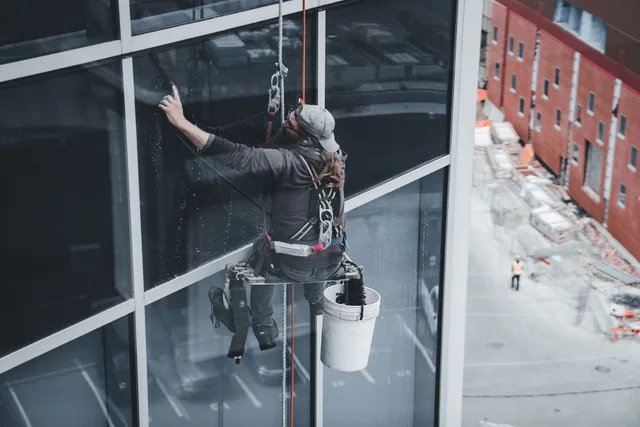
One line is missing from the table on purpose. Any service performed at height carries a preparation cost that belongs in T and is routinely left out: access planning, equipment inspection, and the time to set up properly.
The fall protection guidance from the Occupational Safety and Health Administration treats that work as planned rather than improvised, which is the honest way to cost it. A height job priced as though setup were free is not a profitable service. It is an unpriced one.
Software that produces the numbers
The ranking only works if your software reports revenue, materials and hours by service line. These five do it, and they are the ones most window cleaning companies actually run. Published tiers and quoted rates move with user counts.
Software priced per user or company
Software
- Jobber
- Crew of 2-15
- ServiceTitan
- Multiple trucks, dispatcher
- Housecall Pro
- Owner-operators leaving paper
- ZenMaid
- Solo operator, dense book
- Launch27
- Selling online, not by phone
Best fit
- Jobber
- $30-$350 per user
- ServiceTitan
- High hundreds monthly
- Housecall Pro
- $60-$350 monthly
- ZenMaid
- Under $100 monthly
- Launch27
- $100-$200 monthly
Published price
- Jobber
- ServiceTitan
- Housecall Pro
- ZenMaid
- Launch27
- Jobber.Built for home service trades, strong on scheduling and recurring visits, priced per user per month. Published tiers typically run from about $30 to $350 per user per month. Best fit for a crew of two to fifteen.
- ServiceTitan.Heavier, more reporting, priced at the top of the market, with quotes per company that typically land in the high hundreds per month plus an onboarding fee. Suits companies running multiple trucks and a dispatcher.
- Housecall Pro.Quick to set up, good card processing, flat monthly tiers typically from about $60 to $350 per month. Suits owner-operators leaving paper.
- ZenMaid.Cheapest of the group, built for recurring residential routes, typically under $100 per month for a solo book. Suits a solo operator with a dense book.
- Launch27.Booking and routing focus, month-to-month pricing, typically $100 to $200 per month. Suits companies selling online rather than by phone.
Whichever you pick, tag every job by service family on the day it is booked. Adding the tag later costs a week of guessing.
Making a low-ranking line pay
Three honest fixes exist for a service sitting at the bottom. Cut travel by refusing work outside a stated radius, or batch the far jobs onto one day. Cut setup by standardizing the kit for that service so nothing is hunted for on site.
Fixing a bottom-ranked service
Is travel the problem?
refuse work outside a stated radius
is setup the problem?
Or raise the price. That requires knowing your cost and explaining the scope in one sentence.
There is a fourth thing companies do instead and it does not work: cutting time on site. That produces the rework visit, and a rework visit takes contribution to zero on a job that already existed.
Do not turn the ranking into an advertisement
An internal ranking is a management tool. It becomes a problem the moment it appears in front of a customer, because claims about outcomes and guarantees have to be supportable. The Federal Trade Commission advertising guidance for small business sets out what backing a claim requires, and "our most effective service" is a claim.
The same caution applies to restoration. Selling mineral removal as a certain outcome is how a profitable line becomes an unpaid one.
Keep the records that make it possible
None of this survives without per-job records that separate revenue, materials and hours by service line. The Internal Revenue Service recordkeeping guidance describes the standard a system has to reach before it shows income and expense clearly, and that standard is exactly what per-service costing needs.
What the ranking changes
Three decisions follow once you have it.
Sales effort moves to the top of the list, so you sell more to customers you already have. Your window cleaning service menu gets shorter, because the bottom two lines are usually kept out of habit.
Equipment spending follows the ranking rather than the catalog. The equipment and setup decisions start from what the profitable services need, not from what looks impressive on the van.
Two constraints sit on top of all of it. Some services need permissions you may not hold, so check them against the licensing and compliance requirements for your own jurisdiction. Others need competence you have to build before you sell it, which is the job of structured hiring and training rather than of a supplier demonstration.
If somebody starting a window cleaning business is reading this, the honest headline is that density beats service selection in the first year. Twenty storefronts on one block will out-earn the most exotic service on this page.
Common questions
Is commercial more profitable than residential?
Commercial is more predictable, which is not the same thing. A full residential interior and exterior job can beat a commercial stop on contribution per hour, then produce nothing for six months. Measure both with the same formula before you decide.
Should I refuse post-construction work entirely?
Not necessarily. Price it as its own service with its own scope, require a written condition report on the glass before you start, and agree payment terms in writing with whoever actually pays. Refuse it when any of those three is missing.
Why does my highest-priced service feel unprofitable?
Almost always travel, setup, or a second visit that never got billed. Add T to the calculation honestly and the feeling usually turns out to be correct.
How many services should a small company offer?
Enough to fill a working day in your area and no more. Every extra family means more equipment, more training, and a chance to be mediocre at something a specialist does well.