Guides
Window cleaning equipment by class: strengths, gaps and a verdict
Window cleaning equipment and setup: decide access first, then compare hand tools against pure-water pole work, load the van, and cost the consumables.
What to take away
- Equipment follows access. Decide the highest pane your company will clean and by what method, and most of the kit list writes itself.
- The two systems that matter are traditional hand tools and pure-water pole work. Nearly every company ends up running both, for different buildings.
- Water quality decides whether pole work leaves spots. That is a filtration decision, not a technique decision.
- The van is equipment. How it is loaded sets how many jobs fit in a day more than the tools inside it do.
- No prices appear here. Get quotes from suppliers you can actually reach for parts, and cost the consumables separately from the hardware.
Ladders, lifts, poles near power lines and anything suspended carry serious risk. Requirements depend on the building, the equipment and the jurisdiction, so take qualified training and technical advice before using any access method.
Decide access before you decide anything else
Write down two lines and put them where the crew can see them: the highest pane your company cleans, and the methods it uses to reach it. Everything below flows from that.
Choose access method first
What is the highest pane you clean?
Ground/low reach -> least equipment and training
Ladders -> training, inspection, insurance
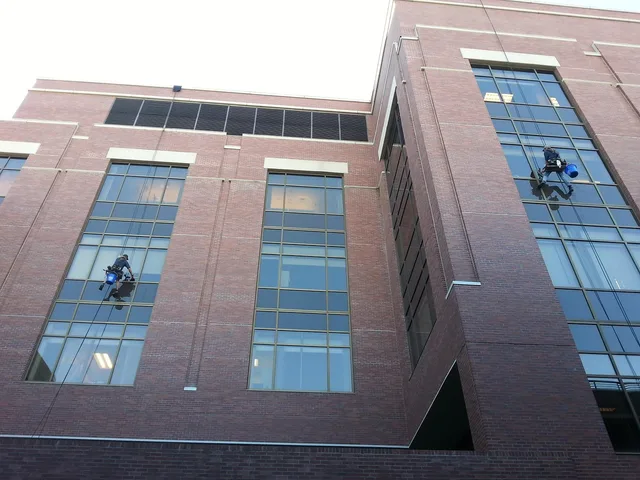
Ground level and low reach needs the least. Extension work from ladders adds training, inspection and a different insurance conversation. Pole work from the ground can reach surprisingly high and moves the problem from falling to water purity and pole handling. Lifts add rental, siting and operator qualification. Suspended access is a separate discipline entirely. OSHA's rule on rope descent systems shows why: before any rope descent system is used, the building owner must tell the employer in writing that each anchorage has been identified, tested, certified and maintained to support at least 5,000 pounds in any direction for each employee attached, and no rope descent system is used for heights greater than 300 feet above grade unless the employer shows no other means is feasible or safer.
The fall protection guidance from the Occupational Safety and Health Administration describes protection as something planned before the work rather than assembled on site, and that is the standard a small company's written access policy should meet.
The traditional kit, and what each part is for
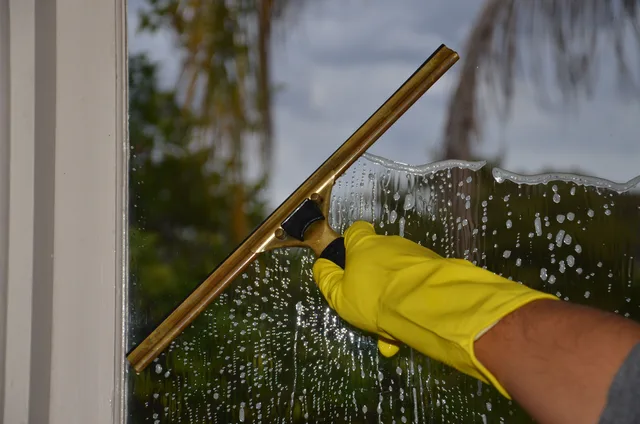
- Channel and handle.The tool the whole trade is built on. Buy a size range rather than one length, because the pane decides the channel, not the preference.
- Rubber.A consumable with a short life. Keep more than feels reasonable, and change it before the crew starts pressing harder to compensate.
- Applicator and T-bar.The wetting side of the job. Sleeve type changes how much water reaches the glass, which changes your detailing time.
- Buckets.One for the pane, one for the tools. A single bucket costs you time on every job in a way nobody notices.
- Detailing cloths and scrim.Edges, frames, and the last pass. This is where a clean either looks finished or does not.
- Scrapers and blades.For construction residue, paint and stickers. The highest-risk items on the van, because the wrong angle on the wrong glass leaves a permanent mark. Every new hire is trained on these before they touch a customer's pane.
- Ladders and stabilizers.Only the ones the company is trained on, inspected on a schedule, and recorded. OSHA's ladder standard requires ladders to be inspected before initial use in each work shift, and more often as needed, for visible defects.
Pure-water pole systems
Pole work changed the economics of anything above the first floor by letting one person clean from the ground. Four decisions decide whether it works for you.
Purity. The whole method depends on water with the dissolved solids removed, so nothing is left behind when it dries. That means filtration sized to your local water, and media that is a running cost rather than a purchase.
Pole material and length. Longer and lighter costs more and fatigues the operator less. Buy for the buildings you actually service rather than for the tallest one you have ever seen.
Brush and flow. Bristle type and water flow are matched to the surface. Getting this wrong shows up as spotting or as frames that stay dirty.
Van or trolley. A tank system in the van is faster and heavier. A trolley is cheaper and slower. Route density usually settles it.
Comparing the two systems honestly
Comparing the two systems
Traditional hand tools
- Reach from the ground
- Low
- Setup time per job
- Very short
- Consumables
- Rubber, cloths, sleeves
- Interior work
- The only option
- Result on first clean
- Immediate and controllable
- Training time
- Longer to master
- Weather sensitivity
- Moderate
Pure-water pole
- Reach from the ground
- High
- Setup time per job
- Longer, especially the first job of the day
- Consumables
- Filter media, brushes
- Interior work
- Not suitable
- Result on first clean
- May need repeat visits on neglected frames
- Training time
- Shorter to reach an acceptable standard
- Weather sensitivity
- Moderate, plus freezing
Most companies run both because the two answer different questions. Interiors and detailed work are hand tools. Repeated exterior maintenance above reach is pole work.
Hand tools vs pure-water pole
Traditional hand tools
- Reach from ground
- Low
- Setup time
- Very short
- Consumables
- Rubber, cloths, sleeves
- Interior work
- Only option
- First-clean result
- Immediate, controllable
- Training time
- Longer to master
- Weather sensitivity
- Moderate
Pure-water pole
- Reach from ground
- High
- Setup time
- Longer
- Consumables
- Filter media, brushes
- Interior work
- Not suitable
- First-clean result
- May need repeat visits
- Training time
- Shorter to acceptable
- Weather sensitivity
- Moderate plus freezing
Strengths, gaps and a verdict for each class of kit
This review works by equipment class rather than by brand, because the class decides what the crew can reach and how the day runs; the brand question comes after it.
| Equipment class | Strength | Gap | Verdict |
|---|---|---|---|
| Channel and handle | The core tool on every pane | One length cannot fit every pane | Buy a size range outright |
| Rubber | Quick to change | Short life, and worn rubber costs detailing time | Stock more than feels reasonable |
| Applicator and T-bar | Controls how much water reaches the glass | Sleeve type changes detailing time | Match the sleeve to the glass you clean most |
| Buckets | Simple and cheap | One bucket costs time on every job | Run two |
| Scrapers and blades | Remove construction residue, paint and stickers | Highest risk of a permanent mark | Buy, but only after training |
| Ladders and stabilizers | Reach upper floors with hand tools | Training, inspection and insurance burden | Only models the crew is trained on |
| Pure-water pole system | High reach from the ground, shorter training | Filtration media is a running cost; no interiors; freezing | Buy when the job count justifies it |
| Van tank or trolley | Tank is faster; trolley is cheaper | Tank is heavier; trolley is slower | Route density decides |
| Lifts | Reach beyond poles and ladders | Rental, siting and operator qualification | Rent |
The van as a system
The van decides how many jobs fit into a day. Three things matter more than capacity.
Loading order, so the first item out is the first item needed. Water, if you carry it, positioned for weight distribution and secured properly. And a fixed place for everything, because a crew hunting for a scraper on every job loses more time across a week than any tool upgrade saves.
Signage is part of the setup too. A clean, clearly marked vehicle parked outside a customer's property is the cheapest advertising in this trade, and it also tells a suspicious neighbor who you are.
Safety equipment is not an accessory
Eye protection, gloves suited to the chemicals in use, footwear with grip, first aid, and a spill plan for anything you carry.
Cleaning work carries its own chemical and slip hazards, which the cleaning industry hazard material published by the Occupational Safety and Health Administration sets out. The same agency's safety and health program guidance describes the written program these items belong inside, not loose good intentions.
Two habits matter more than any purchase. Inspect ladders and access equipment on a written schedule and record it. And keep the safety data sheets for every chemical on the van, where the crew can read them rather than in an office file.
What to buy, rent and skip in the first year
Buy the hand-tool kit outright. It is cheap relative to its use and it is on every job.
Buy a pole system when you have counted the jobs that need it. Rent lifts. Skip anything that needs a special trip to justify, and skip the second van until loading time or capacity is genuinely turning work away.
The dividing line is usage, not aspiration: equipment that runs weekly earns its capital, and equipment that runs twice a year is a rental.
Costing equipment properly
Hardware is the visible cost and usually the smaller one. Consumables, filter media, replacement rubber, brushes and cloths run continuously and are what a per-job cost calculation actually needs.
The Internal Revenue Service recordkeeping guidance sets the standard a system must reach to show income and expenses clearly. Equipment is one category it expects to be traceable.
Keep purchase records, warranty documents and the maintenance log together from the start. You will need all three for insurance, tax and the day you sell a vehicle.
Matching kit to the menu you sell
Equipment bought without reference to the service menu is how vans end up full of things that run twice a year. Work backward: take the service menu you actually sell and list what each line needs, then buy in order of how often the line runs.
The other input is geographic. Buildings in a dense storefront pocket need almost nothing beyond hand tools and a short pole; a spread-out residential book needs carrying capacity and water. Read your local market and route shape before signing for a tank system.
Common questions
Do I need a pure-water system to start?
No. Plenty of companies build a full storefront route with hand tools and a short pole. Buy the system when the jobs you are turning down, or the ladder work you are uncomfortable with, add up to a reason.
How long does squeegee rubber last?
It depends on the glass, the grit and how it is stored, which is why nobody can give you a number that means anything. Track your own replacements for a month and you will have a figure that is actually yours.
Is a van necessary, or will a car do?
A car works for a hand-tool storefront route. It stops working the moment you carry water, ladders or a second person's kit. Change vehicles when loading time is costing you jobs, not before.
What is the most common equipment mistake?
Buying the top of a range before knowing the work. The second most common is running rubber and cloths too long, which costs detailing time on every single job and never shows up as a line item.